// Memoir · Recovery · Context
The Quarter-Century War
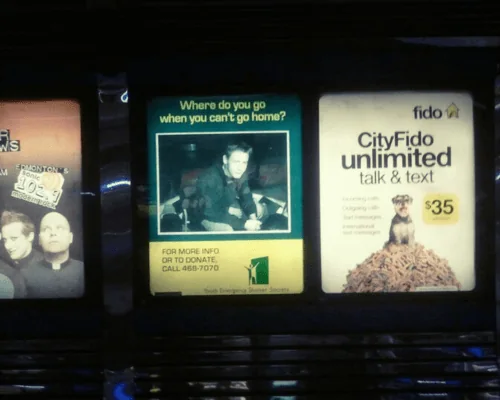
My recovery started in 2001. What followed was two decades of attempts and relapses. At sixteen I was already coming apart. Cocaine and alcohol were consuming me, and at the same time I was becoming the public face of an Edmonton youth homelessness shelter. Featured in commercials. Plastered on billboards. A public success story covering a private disaster. From eighteen onward I lived split between two realities. By day, semi-functional, channeling raw anxiety into work and climbing parts of the corporate ladder on white-knuckled effort. By night I disappeared into crime, sex, drugs, and reckless chaos. Chaos wasn't just familiar. It was the only home I knew. The more of it I found, the more it confirmed everything already written about me.
By my late thirties, after countless attempts and interventions, I was quietly meeting all eleven DSM-5 criteria for Substance Use Disorder. Truthfully, I had been for years. When I did manage sobriety, it often felt worse than using, and I took that as proof I was broken beyond repair. What I didn't understand yet was that the trauma underneath had never been touched. Alcohol had become my outsourced nervous system, delivering the only moments of peace available to a brain wired for war. My addiction wasn't a moral failing. It was survival gone sideways.
Early treatment had convinced me sobriety would fix everything. It didn't. After nearly a year clean I looked fine on paper. Stable job. Bills paid. Relationships repaired. Inside I was coming apart at the seams. The anxiety was relentless and invisible. I hid panic attacks behind locked bathroom doors. I avoided people because even the smallest interaction could derail an entire day. I remember standing on train platforms for an hour or more, watching packed car after packed car slide past, because stepping into a crowded train felt worse to me than dying. Every day was survival in slow motion. Fight-or-flight running constantly behind a calm face. I didn't understand what was happening to me. I only knew one thing with certainty: sobriety isn't the same as peace.
Sobriety ≠ Peace
The turning point came during my final stay in a concurrent-disorders program in Southern Alberta. It wasn't my first rehab. It was the first time I stopped running from my childhood and turned to face it. The process was painful in ways I hadn't anticipated. It also cracked something open. Vulnerability. Insight. And for the first time in longer than I could remember, a hope that didn't feel like a lie.