 KNOW YOUR MACHINERY

Know Your Machinery
The Science Explains the Struggle
Some of what follows may feel like overkill if your recovery lens has mostly been abstinence-based or faith-based. The goal here isn't to excuse behaviour — it's to add the perspective that's been missing. Understanding the biology behind addiction doesn't erase responsibility; it sharpens the conversation. Looking at the genetic and metabolic factors lets us move beyond shame and moralizing and start asking a harder question: why do certain behavioural patterns not only emerge, but ruthlessly persist?
The science here goes deeper than any treatment program is likely to cover — and that's intentional. This isn't a conversion to pharmacogenomics. It's context, offered because understanding the biology is one of the fastest ways to loosen shame's grip.
// Your Genetic Blueprint and Substance Metabolism
The first time I heard about genetic predisposition in relation to addiction, I called bullshit. I refused to believe I was born with crossed wires or that my biology might be quietly steering the ship. It sounded like an excuse — and worse, it suggested that something else might be in control.
That started to change when I looked at my own family. My father avoided alcohol for most of his life because two or three beers made him sick. My body processed alcohol differently — efficiently enough that I could drink to excess and do it again the next day, and the day after that, for years. That contrast was impossible to explain away.
Years later, I see it much differently. Understanding the biology of addiction didn't weaken my sense of agency — it sharpened it. It gave me tools, context, and a kind of compassion I hadn't been able to access before. With every piece of science I absorbed, shame loosened its hold.
Think of Your Enzymes Like Tools in Your Personal Toolbox
Every substance you've ever taken — legal or illegal — has to pass through your body's chemical toolbox before it leaves your system. Those tools are your metabolic enzymes, and your genetics determine how they're built.
Imagine opening that toolbox. For some people, every tool is fitted perfectly — sleek, efficient, purpose-built. For others, the wrench is oversized, the blade is stripped, and half the tools don't match the job. The result? A group of people can take the same dose of alcohol, opioids, or antidepressants and walk away with completely different outcomes — one buzzing, one sick, one feeling nothing at all.
This is where biology collides with behaviour. A fast enzyme can clear a drug so quickly you barely feel it — pushing you to use more to chase the effect. A slow enzyme traps substances in your system longer than intended, amplifying both the high and the crash that follows. Neither setup is "good" or "bad" — but your genetic wiring shapes the chemistry you're working with before you ever make a choice.
Biology doesn't dictate your substance of choice, but it tilts the table. The same dose can reward one person with euphoria and send another spiralling into a Willy-Wonka–themed nightmare — nudging one toward alcohol and the other toward stimulants.
// The Key Players: The Enzymes That Process Substances
The liver is the body's main processing plant, and these enzymes are its frontline workers. Their speed and efficiency are a primary reason two people can take the same dose of a substance and walk away with completely different experiences.
Enzymes are the unseen hands that shape how every substance feels, lasts, and lingers.
-
CYP2D6
Breaks down many psychiatric meds, opioids, and stimulants
Influences how codeine converts to morphine, how long methamphetamine stays active, and how SSRIs like fluoxetine perform. Too slow → intense effects and compounding side effects; too fast → little to no benefit.
-
CYP3A4
Metabolizes roughly half of all medications
Processes Xanax, cannabis, fentanyl, and many others. Variants here can make these drugs linger far longer than intended — or clear so fast they provide no relief.
-
CYP2C19
Processes SSRIs, PPIs, and some benzos
Explains why a medication like citalopram can be heavily sedating for one person and completely ineffective for another — same drug, same dose, different biology.
-
ADH / ALDH2
Break down alcohol and its toxic byproducts
Slow ALDH2 activity causes flushing, nausea, and a racing heart — a built-in biological deterrent to heavy drinking. Faster activity can make alcohol feel more rewarding and may increase addiction risk. (This is the same system behind the alcohol flush I saw in my father.)
-
COMT
Clears dopamine and stress-related neurotransmitters
Fast COMT clears dopamine rapidly — lowering baseline levels and driving risk-taking behaviour. Slow COMT allows dopamine to accumulate — increasing emotional reactivity and stress sensitivity.
-
MAO-A
Breaks down serotonin, dopamine, and norepinephrine
Influences mood stability, impulse control, and how the system responds to stimulants.
-
CES1A1
Breaks down methylphenidate (Ritalin) and similar drugs
Explains why the same ADHD medication can feel overwhelming for one person and barely noticeable for another.
-
UGTs
Detoxify substances via glucuronidation (non-CYP pathway)
Particularly relevant for benzos like lorazepam, which bypass the CYP system — making them better tolerated in people with liver damage.
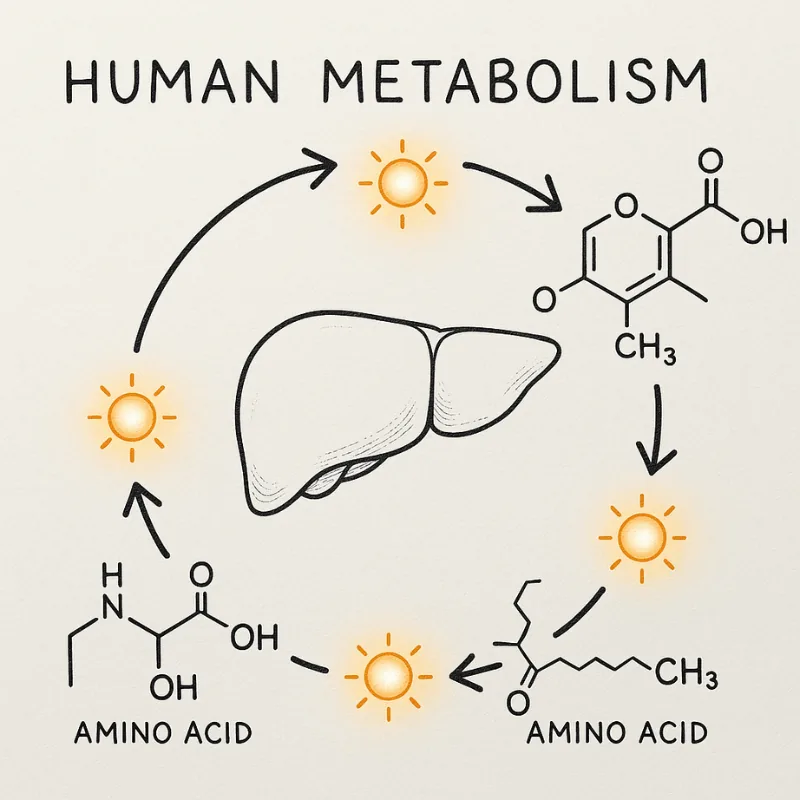
Tests exist that can show you exactly where you land with some of these enzymes. Pharmacogenomic panels (cheek swab or saliva tests) map how your genes influence medication and alcohol metabolism. Blood tests can track how your body processes specific prescriptions in real time. For anyone who wants less guesswork and more clarity, these tools can make the science feel concrete — and directly useful in recovery.
// At a Glance: How Enzyme Speed Shapes Your Experience
Enzyme activity — fast, slow, or somewhere between — shapes more than most people realize. It determines how hard a substance hits, how long it stays, how fast it clears, and how much risk accumulates with repeated use. These aren't theoretical differences. They show up in cravings, tolerance, and the substances a person is drawn to in the first place.
-
CYP2D6
Fast (High Activity)
Weaker effects from opioids or antidepressants — higher doses needed to feel anything
Slow (Low Activity)Stronger, longer-lasting effects — higher risk of side effects or overdose at standard doses
-
ADH / ALDH2
Fast (High Activity)
More reward, more tolerance — alcohol feels good longer, which may increase addiction risk
Slow (Low Activity)Flushing, nausea, rapid heartbeat — a built-in biological brake on heavy drinking
-
COMT
Fast (High Activity)
Dopamine clears fast → lower baseline, risk-taking, craving for stimulation
Slow (Low Activity)Dopamine lingers → higher baseline tone, emotional reactivity, stress sensitivity
Your genes don’t dictate your choices — but they do shape the chemistry you’re working with.
Using pharmacogenetics for treatment-resistant depression we can be much more precise about exactly which drug will suit each person's unique blueprints for the bodily systems that usher the drug into the brain and enable it to fight depression. It's very personalized to each individual.
Dr. James Kennedy, CAMH / ScienceDaily, March 29, 2022

How Chronic Use Rewires the System
Your genetic blueprint is the starting point — not the whole story. The substances you use, and the duration and intensity of that use, reshape these systems over time. Some of those changes reverse in recovery. This is one layer of the picture — important context, but not a complete explanation of addiction on its own.
- Enzyme Induction: The liver adapts to break down a drug faster. Clearance accelerates, tolerance builds, and the dose that once worked stops being enough.
- Enzyme Inhibition: Some substances block the enzymes that process other drugs — causing unpredictable buildup and, in some cases, dangerous interactions.
- Organ Damage: Chronic use can injure the liver, kidneys, or pancreas — eroding overall metabolic capacity and complicating medication dosing long after use stops.
- Neuroadaptation: The brain adjusts to constant chemical exposure. Receptors downregulate or upregulate, neurotransmitter production shifts, and the ability to feel reward — from substances or from ordinary life — changes accordingly.
This is part of why two people with the same diagnosis can respond so differently to the same medication — and why history of use matters when treatment decisions get made.
Consequences for Future Treatment
-
Reduced medication effectiveness
Altered receptors or metabolism can blunt the impact of antidepressants, pain medications, or mood stabilizers — making an otherwise appropriate prescription feel useless.
-
Higher risk of side effects
Slowed clearance allows drugs to accumulate past therapeutic levels — into uncomfortable or toxic territory.
-
Greater risk of interactions
A taxed or over-adapted liver is easily overwhelmed when multiple medications compete for the same enzyme pathways.
-
More trial-and-error
Unpredictable drug response means finding effective psychiatric or pain medications takes longer — and often costs more in failed attempts before something works.
When Treatment Becomes Template
Medication-assisted treatment can be life-saving. But too often it's applied like a template — the same medications handed to very different people, across very different histories, and measured against a standard that assumes everyone should respond roughly the same way.
The reality is that real metabolic differences exist from person to person — and years of substance use leave a mark on those processes in ways that aren't uniform. Alcohol, opiates, and stimulants don't just create different dependencies — they affect different systems in the body, and those systems are often the same ones medications need to work through. This is increasingly recognized in addiction medicine, even if the system isn't yet set up to routinely test for it. Someone who spent years on alcohol arrives at treatment with a different internal landscape than someone coming off opiates or stimulants. Those differences matter when it comes to what medications are likely to help, what's likely to cause problems, and what the body simply won't respond to. But a doctor who actually knows your history — what you used, for how long, and what it did to you — can at least make an educated guess. That's not precision medicine. But it's a better starting point than the boilerplate.
A poor medication response does not automatically mean resistance, noncompliance, or lack of effort. Sometimes it means the treatment is too standardized for a system that was never standard to begin with.
Understanding your genetics doesn't mean surrendering responsibility — it means you stop guessing. Your choices still matter, but they land differently when you know the ground you're standing on. Addiction is shaped by biology, environment, history, and circumstance. Reducing it to "bad choices" doesn't just miss the point — it fuels the shame that makes recovery harder.
The goal here isn't to send you chasing lab tests or genetic panels. It's to make clear that there are real, measurable mechanisms at work in your body — and that knowing this matters. Not because it changes what happened, but because it changes how you understand it. You are not broken for struggling. You are wired in a particular way, facing particular risks — and once you understand the system you're actually working with, the path forward gets a little less like guesswork and a little more like a plan.
Where to Next?
Follow the next step in order, or branch out into related topics.
- Zanger, U. M., & Schwab, M. (2013). Cytochrome P450 enzymes in drug metabolism: regulation and clinical significance. Pharmacology & Therapeutics, 138(1), 103–141. Comprehensive review of how CYP450 enzymes (including CYP2D6, CYP2C19, and CYP3A4) govern the breakdown of many psychiatric medications, opioids, and other drugs — directly underpinning this page’s explanation that enzyme speed shapes how long a substance lingers, how strong it feels, and how big a dose gap exists between people on the same prescription. View on PubMed
- Zhao, M., & Zhao, H. (2021). Cytochrome P450 enzymes and drug metabolism in humans: a comprehensive review. International Journal of Molecular Sciences, 22(23), 12808. Open-access overview of CYP-mediated metabolism, induction, and inhibition across drug classes — supporting the page’s discussion of how chronic use, drug–drug interactions, and enzyme induction/inhibition can make the same medication feel suddenly too strong, too weak, or dangerously unpredictable. View full text
- Zhang, Y., et al. (2024). CYP3A4/5: crucial roles in clinical drug metabolism. Frontiers in Pharmacology. Highlights that CYP3A4/5 handle roughly 30–50% of all prescribed drugs, including benzodiazepines, opioids, and many other medications mentioned on this page — grounding the “half the toolbox” idea and explaining why small differences in CYP3A4 activity can radically change how long a drug like Xanax or fentanyl stays in the system. View full text
- Niwa, T., Inoue-Yamamoto, S., Shiraga, T., & Takagi, A. (2004). CYP2D6*10 and CYP2C19 polymorphisms in a Japanese population: effects on the pharmacokinetics of drugs metabolized by CYP2D6 and CYP2C19. European Journal of Clinical Pharmacology, 60(9), 541–548. Examines how common CYP2D6 and CYP2C19 genetic variants in an East Asian population change the breakdown of several medications — reinforcing this page’s point that “slow” versus “fast” enzyme tools are not abstract concepts but measurable differences that help explain why standard doses can feel far too strong for some people and barely effective for others. View on PubMed
- Eng, M. Y., Luczak, S. E., & Wall, T. L. (2007). ALDH2, ADH1B, and ADH1C genotypes in Asians: a literature review. Alcohol Research & Health, 30(1), 22–27. Reviews how ALDH2 and ADH variants alter acetaldehyde breakdown and produce the classic alcohol flush reaction — linking directly to this page’s description of flushing, nausea, and rapid heartbeat as a built‑in biological brake on heavy drinking, and showing how the same number of drinks can feel protective for one person and deceptively smooth for another. View on PubMed
- Zubieta, J. K., et al. (2003). COMT val158met genotype affects μ-opioid neurotransmitter responses to a pain stressor. Science, 299(5610), 1240–1243. Shows how COMT variants change dopamine and endogenous opioid responses to stress and pain — giving neurobiological backing to this page’s description of fast vs slow COMT as shaping baseline dopamine tone, stress sensitivity, and the pull toward substances that briefly “even out” the system. View via DOI
- Clinical Pharmacogenetics Implementation Consortium (CPIC). (2020). Guideline for opioids and CYP2D6/OPRM1/COMT. Evidence-based recommendations on how CYP2D6 and related genes should guide codeine and other opioid dosing — grounding the page’s point that pharmacogenomic panels are not fringe science but already used to reduce trial-and-error and prevent both under-treatment and overdose in people with atypical metabolism. View guideline · Download PDF
- CPIC. (2023). CPIC guideline update for SSRI and SNRI antidepressants and CYP2D6/CYP2C19. Links common antidepressants (like fluoxetine and citalopram) to CYP2D6/CYP2C19 phenotypes, reinforcing the table examples where one person is sedated and another feels nothing at the same dose — and illustrating how pharmacogenomic testing can make medication choice less of a blind guess in recovery. View on PubMed · Guideline summary
- National Institute on Alcohol Abuse and Alcoholism (NIAAA). (updated). Alcohol flush reaction: Does drinking alcohol make your face red? Explains how ALDH2/ADH variants create flushing, nausea, and palpitations after small amounts of alcohol — a built‑in biological brake on heavy drinking that mirrors the “Willy-Wonka-themed nightmare” language on this page and shows that feeling awful after a few drinks is a genetic safety feature, not a weakness. View article
- Cho, Y., et al. (2023). Genetic influences on alcohol flushing in East Asian drinkers. BMC Genomics. Genome-wide association work confirming ALDH2 and ADH1B as major drivers of the flush reaction — reinforcing the idea that the “same” alcohol exposure is, at the level of enzymes and acetaldehyde buildup, a completely different experience for different genetic blueprints. View full text
- Stage, C., et al. (2017). CYP-independent CES1 genotypes are major determinants of methylphenidate pharmacokinetics. Clinical Pharmacology & Therapeutics, 101(3), 359–367. Demonstrates how CES1 variants alter Ritalin and similar stimulant levels — supporting the table row explaining why a standard ADHD dose can feel overwhelming for one person and barely register for another, even when their CYP enzymes look “normal.” View full text
- Sun, Z., et al. (2004). CES1A1 is the major enzyme for the first-pass metabolism of methylphenidate. Drug Metabolism & Disposition. Identifies CES1A1 as the primary enzyme clearing methylphenidate on first pass through the liver — reinforcing this page’s emphasis that “toolbox” variability goes beyond CYP450 and into other enzymes that silently shape stimulant response. View on PubMed
- Chung, J. Y., et al. (2005). UGT2B15*2 polymorphism and the pharmacokinetics/pharmacodynamics of lorazepam. Clinical Pharmacology & Therapeutics. Shows that UGT variants change how lorazepam is cleared, backing the page’s note that some benzodiazepines bypass CYP pathways and may be better tolerated in people with liver damage or complex CYP profiles. View on PubMed
- Jarrar, Y. (2021). Functional impact of UGT genetic variants: clinical implications. Pharmaceuticals. Broad review of how UGT polymorphisms affect drug clearance and toxicity risk — extending the “toolbox” metaphor beyond CYP and grounding the claim that non‑CYP pathways still shape how long sedatives and other medications sit in the body. View full text
- Farrell, S. M., et al. (2012). COMT Val158Met genotype and the inverted-U dopamine curve in decision-making. Proceedings of the National Academy of Sciences. Explores how COMT variants shift people along the inverted-U curve for dopamine and cognitive performance — aligning with this page’s framing that “too fast” or “too slow” dopamine clearance can tilt someone toward thrill‑seeking, emotional volatility, or both. View full text
- Kolla, N. J., et al. (2020). The role of monoamine oxidase A (MAO-A) in the neurobiology of aggression: a review. Frontiers in Psychiatry. Reviews how MAO-A shapes serotonin, dopamine, and norepinephrine levels and links certain variants to impulsivity and aggression — providing mechanistic backing for the page’s brief note that MAO-A influences mood stability, impulse control, and response to stimulants. View full text
- U.S. Food and Drug Administration (FDA). Drug development and drug interactions – table of substrates, inhibitors and inducers. Curated tables listing which drugs use, inhibit, or induce specific CYP enzymes and transporters — a practical counterpart to this page’s “toolbox” analogy that shows in black-and-white how stacking medications on the same enzyme pathway can create the interaction risks described in the treatment tables. View FDA tables
- National Institute on Drug Abuse (NIDA). (2018). Drugs, Brains, and Behavior: The Science of Addiction. NIH booklet summarizing how substances hijack reward, stress, and learning circuits — providing the broader addiction-neuroscience backdrop for this page’s argument that metabolic enzymes are one key part of why the same dose hits so differently across people, and why biology helps explain stubborn patterns that look like “just choices.” Download PDF
These sources ground the page’s focus on CYP450, ADH/ALDH2, COMT, MAO-A, CES1, and UGT variability — showing how genetic blueprints and chronic use shape drug effects, alcohol metabolism, side effects, and treatment response. They are educational and not medical advice.