 THE REALITY TEST
The Reality Test
A Gold Standard Exercise
Running the Experiment:
The Reality Test
Your brain isn't a crystal ball. It's closer to a Magic 8-Ball with all the positive options removed, a prediction machine utterly convinced of its own accuracy. And most of the time, it's about as reliable as drunk-me announcing, "this is definitely my last drink."
As I got more comfortable with CBT and DBT and started going deeper into the neuroscience, one question kept nagging at me: What single practice would create the biggest long-term shift? If I had to bet everything on one exercise, one thing with the most neurological leverage: what would it be?
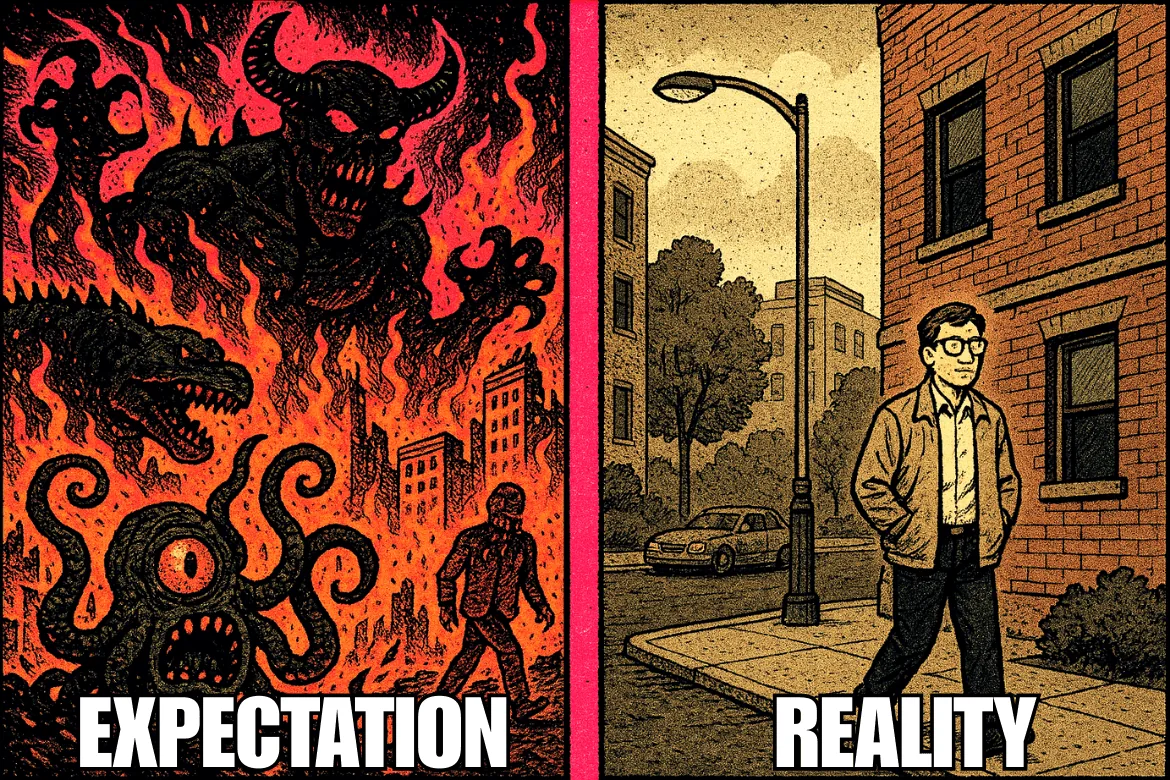
What I kept landing on was this: CBT and DBT are both powerful on their own, but when thought and behaviour shift at the same time, something different happens. The neuroscience has a name for it, a prediction error: the moment when what your brain expected and what actually happened don't match. That gap is one of the places where real rewiring can begin. And every time I came back to that, I kept arriving at the same place: the behavioural experiment.
I've also built in a "why it works" section throughout, because I can't help myself, and because understanding the mechanics matters. So even if part of you is sitting there thinking "this is stupid" or "nothing is happening", you'll know exactly what's going on underneath. And if you're still skeptical? Your first experiment can be testing whether this experiment even works. That counts.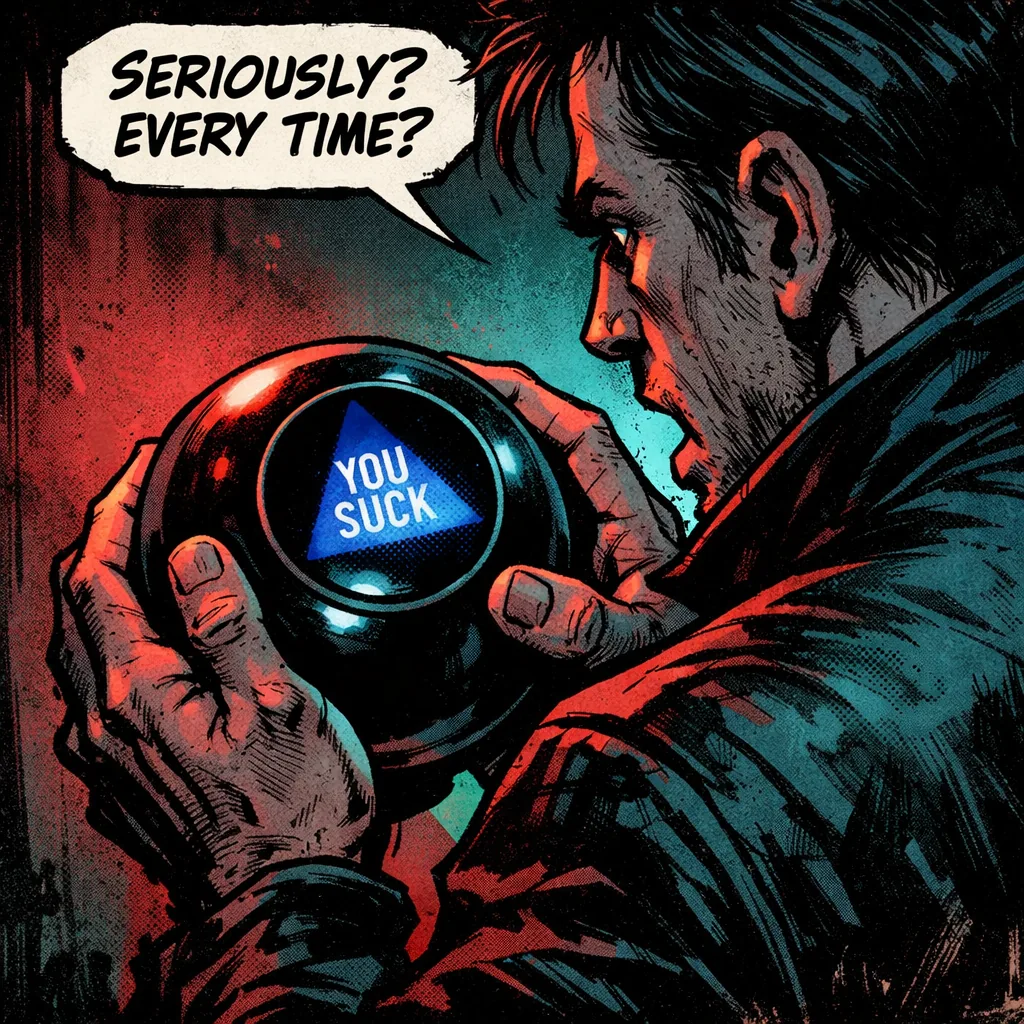
When fear stops you from acting, from speaking up, trying something new, confronting someone, or walking into a room that makes your chest tighten, your brain isn't warning you. It's writing fiction. Fiction that feels real. Fiction your body responds to as if it's already happening. But a prediction is still only a theory. And the only way to know: the only way to actually know, is to run the experiment.
This is CBT logic-testing meets DBT emotional grit. You face the fear, move anyway, and collect actual data instead of recycling the same story. It's one of the more effective tools we have for reshaping both biology and psychology, not because it's comfortable, but because recovery has never once been a comfort-first process. The moments in my own life that came loaded with the most dread were almost always the exact moments I most needed to walk through.
So you might as well make the discomfort useful.
Optional add-ons are listed below each step. Think of them as "neural amplifiers": the small adjustments that help the experience actually stick rather than slide off.
Not every fear is meant to be "just pushed through."
If your prediction involves a realistic risk of abuse, violence, coercion, or a boundary being violated, the experiment isn't "do it anyway", it's "get support, prioritize safety, and consider involving a therapist or safety plan." The Reality Test is for anxiety-driven predictions. Not dangerous situations.
The Prediction
Before anything happens, we take a screenshot of the story your brain is already telling. Write down:
-
The Avoided Action
What are you putting off? Be specific. ("Email my boss about the mistake," "Ask my friend if they're upset," "Go to that meeting.")
-
The Story
What's the worst-case your brain is selling you? Finish the sentence: "If I try ___, then ___ will happen." Don't clean it up, write the raw version.
-
The Feelings
What emotions show up when you imagine doing it? Name them. Rate each one 0 to 10. Don't skip this part: the number matters.
-
The Body's Vote
What does your body do with the story? Stomach knot, chest tightness, flushed face, shaky hands, urge to bolt. Your nervous system is already casting its vote, write down what it says.
Before you act, close your eyes and rehearse one thing: you, steady, grounded, following through. Don't script the room or the other person's reaction. Just see yourself afterward, closing the laptop, walking to your car, feeling the quiet satisfaction of someone who didn't flinch. That's the image that sticks.
This step isn't about designing an experiment from scratch, in formal CBT protocols, that can take an entire session. Here the bar is lower and the pace is faster: get honest about what's blocked, capture the fear before your brain cleans it up, and make sure you actually know what's driving the avoidance. That's the only setup you need. The experiment begins in the next step.
The Experiment
Now you run it. Not perfectly, just actually. The goal isn't a flawless performance; it's data. You're testing whether your brain's prediction survives contact with reality.
-
Scaled-Down Action
Do the full thing if you can, that's where the clearest data comes from. If the full version is genuinely out of reach right now, find the smallest version you can actually execute. Think "20 minutes or 20%."
// FULL SEND vs. Scaled-Down
FULL SEND: Go to the party. Stay the whole time.
Scaled-Down: Show up, say hi to the host, grab a water, leave whenever you need to.Simple Plan, Not a Script: One or two lines: what you'll do, roughly when, and who's involved if anyone. That's it. Leave room for real life to be messy. The experiment still counts even when the details don't cooperate.
Examples:
Even the smallest action generates real evidence.
- Draft the message. Don't send it yet.
- Ask one small question instead of the big one.
- Walk into the room. You don't have to stay.
- Start the task for two minutes. Just two.
-
The DBT Skill
Radical acceptance meets distress tolerance. You're not waiting to feel ready, you're agreeing to feel uncomfortable without letting it make the decision for you. Say it out loud if you have to.
"I'm willing to feel anxious for a few minutes. The feeling is temporary. The data is permanent."
-
Execute
Do the thing. Send the message. Make the call. Take the step. Shaky is fine. Messy is fine. Imperfect is fine. Action is the only currency your brain accepts as evidence.
Before you move, one slow breath in and out, then: "My body can feel fear, and I can still move forward." This pairs action with regulation instead of panic, teaching your nervous system that moving through fear is a signal for safety, not a threat.
The Results
While it's still fresh, right now, before your brain starts editing the memory, capture what actually happened. This is one of the moments where the rewiring can start to stick.
-
What Actually Happened?
Describe it like a scientist. No judgments, no interpretation, just facts.
("I asked the question. They answered it. I survived.") -
Prediction vs. Reality
Hold your brain's prediction up against what actually unfolded. Accurate? Exaggerated? Completely fabricated? The catastrophic part: the part that felt certain, how much of it showed up? -
Aftermath
Re-rate your emotions now. Notice what shifted in your body. Did the chest loosen? Did the dread drop faster than expected? Did relief show up before you thought it would? Write it down. That data belongs to you now. -
Re-Scripting
If it went well: what story makes more sense now than the one you walked in with?
If it didn't go well, was it actually as catastrophic as your brain promised?
What would you do differently? What does this experiment tell you?
This is how beliefs get updated instead of recycled.// Re-Scripting Template
"I predicted [X], but [Y] happened. This means [Z]."
Example: "I predicted I'd panic, but I was only nervous. This means my body can handle discomfort without spiraling."
Whatever happened, say this, out loud if you can:
"I showed up. I did the thing. I can handle more than I thought."
This isn't feel-good noise. It's helping to build self-efficacy, your brain's working belief that your actions actually matter.
If shame or disappointment shows up (it will, occasionally), try: "It's okay to feel this way. Progress isn't about perfection, it's about participation."
This can help turn down the threat response and support prefrontal regulation, making it more likely the learning sticks instead of dissolving into self-criticism.
Close your eyes for a few seconds and deliberately tag the moment: "This moment matters: this is what growth feels like." Pair it with a slow breath.
Sleep consolidates emotional learning, jotting your notes before bed gives this extra weight.
Why This Actually Works
This isn’t confidence-building dressed up in scientific language. There’s a specific mechanism at work, and it’s worth understanding, because knowing why something works makes it easier to trust the process when it doesn’t feel like it’s working.
Your brain is a prediction machine. At every moment it’s running a model of what’s about to happen. Dopamine neurons in your midbrain are constantly comparing that model against what actually arrives. When reality matches the prediction, nothing changes. When reality contradicts it, the brain is forced to update. Neuroscientist Wolfram Schultz identified this as the reward prediction error, one of the primary mechanisms by which the brain learns anything at all. (Schultz, Dialogues in Clinical Neuroscience, 2016)
Fear survives on untested predictions. Avoidance is the mechanism that keeps those predictions safe from contradiction. Every time you don’t walk into the room, your brain’s threat model goes unchallenged, and consolidates. The fear doesn’t stay the same size. It grows.
The behavioural experiment breaks that loop. When you move toward the feared thing and the catastrophe doesn’t arrive, your brain receives a prediction error it cannot ignore. The old threat model is wrong. The brain updates. Repeat that enough times and the prediction itself changes, not through insight, not through affirmation, but through data the brain cannot argue with.
It works across every version of the struggle, social anxiety, depression, addiction, impostor syndrome. Whatever your brain has been predicting, the antidote is the same: run the experiment. Let reality write the ending instead of fear.
That’s not metaphor. That’s the mechanism.
And that’s why this works even when it doesn’t feel like it’s working.
A Realistic Caveat
I didn't build this page to blow smoke at you. Not every fear is irrational. Not everything goes well just because you decided to face it. We both know better than that. Even a busted clock is right twice a day.
What behavioural experiments do show, consistently, reliably, across decades of research, is that the chest-tightening, "THIS WILL DEFINITELY HAPPEN" predictions almost never play out the way your brain insists they will. And on the rare occasions they do? They're almost never the world-ending event fear sold you.
But here's the part I didn't understand for a long time, and I mean really didn't understand, not just intellectually: I preferred keeping the terrifying outcome locked in my head rather than dealing with it. Not because I thought it would stay manageable in there. Because as long as it lived only in my head, it hadn't been decided yet. The moment you move, the outcome gets determined. It stops being a floating catastrophe and becomes something actual. And that moment: the one right before reality arrives, was always where I came apart.
So I'd avoid. And I was good at it. Masterclass-level. And I'd tell myself the thing most avoiders tell themselves: it'll probably just resolve itself. It almost never did. What actually happened was the opposite, every day I left it alone, my discomfort with confronting it grew slightly faster than my tolerance for sitting with it. The gap widened. The thing got bigger. The avoidance that felt like relief on Monday felt like paralysis by Friday. And somehow, the dread of addressing it was always just a half-step ahead of my ability to do it.
And none of it was Armageddon. That's the part that still gets me. The fears I finally walked toward: the ones I'd been rehearsing as catastrophes, almost never became what I'd promised myself they would. And the moment I actually moved, the endless loop of "what if" became "what now." That shift. That's the whole thing.
That said, here's the part a lot of recovery content will quietly tiptoe around: sometimes the thing you're afraid of actually happens. The awkward moment arrives. The rejection lands. The conflict you could barely tolerate imagining finally shows up at the door.
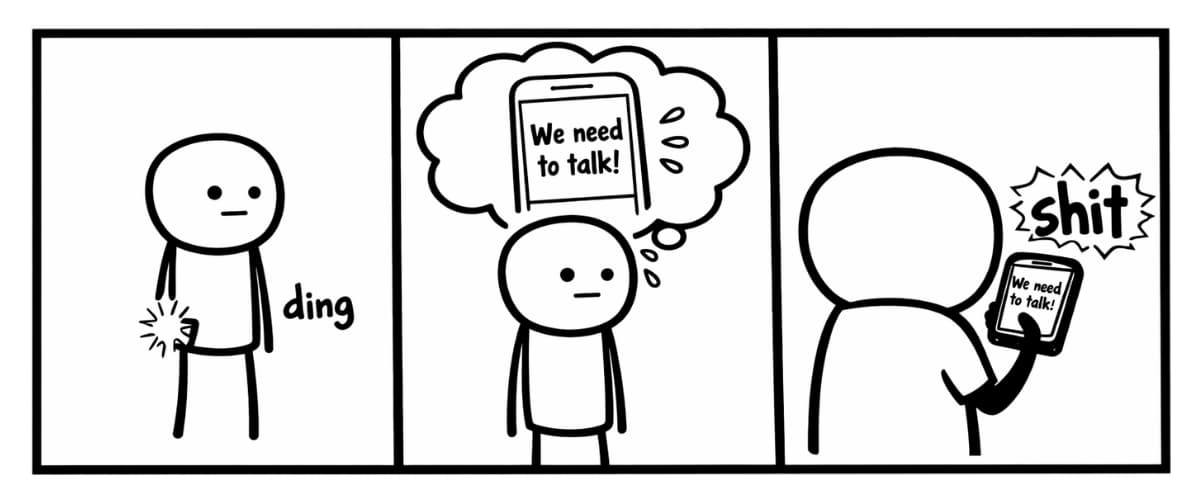
And yea, it's probably not going to be awesome. It might hurt in ways that linger longer than you'd like. But it will no longer be hypothetical. And once something is real, you can work with it. Real things can be responded to, navigated, learned from, and eventually left behind. A fear with no expiry date is far more destructive than a bad day with an ending.
The difficult things still happen. They just happen far less often, and land far less catastrophically, than fear predicted. And with each experiment, you learn two things at once, without trying: most fears dissolve the moment reality shows up, and the ones that don't dissolve become stepping stones instead of stop signs. That distinction is everything.
This is how you build resilience that isn't delusional. Not "positive vibes only." Not blind optimism dressed up as courage. Evidence. Experience. Repetition. You learn that the world isn't as dangerous as your nervous system insists, and that when it does get hard, you are more capable of handling it than you believed.
This is the real win:
not that life gets easier, but that you become someone who can handle it when it doesn't. Someone who acts, observes, learns, and keeps moving, even when things go exactly as badly as you feared they would.
Case Study: Tantra Speed Dating
After treatment, I stayed close with a couple of people as actual healthy supports, which was new for me. One day I mentioned wanting to try Toastmasters. Work on the public speaking thing. They were immediately in.
Then one of them looked at me and she asked:
"Will you come to a speed dating event with me?"
My heart relocated to my throat.
First thought: "Well. I guess I have to move cities and change my name."
The anxiety was instant, total, and completely out of proportion to a question that was not, technically, a threat on my life.
But I caught myself. And here's what actually went through my head:
"You are terrified of something that could genuinely help you. That's not caution, that's your damage talking. You're not here to find a relationship. You're here to prove to yourself that you can walk into a room that scares the hell out of you and not fall apart. That's the whole experiment. Which means you have to go. Obviously. Against every instinct you have. You absolute coward. Go."
To make things more exciting exponentially, cosmically worse, this was no ordinary speed dating event. This was Tantra speed dating.
Eye gazing. Giving strangers massages. Hugging people you just met for three to five minutes.
For someone with severe social anxiety, this was a very specific, artisanal kind of hell.
I showed up anyway. I was terrified. Awkward. Visibly, embarrassingly clumsy. My body was filing a formal complaint the entire time. I misspoke. I probably over-apologized. I was a complete disaster by any reasonable standard.
And here's the part that matters: not one single catastrophe my brain had promised actually showed up.
Nobody gasped when I walked in.
I did not forget to wear pants.
No one stood up and announced, "There he is: the hopeless alcoholic! Everyone take a step back."
Every last "what if" dissolved the moment reality had the audacity to just be normal.
I survived.
More than that, I actually had a great time.
Walked out proud, lighter, and more alive than I had felt in years.
Pants still on. Nobody died. Sober.
That's how change actually happens: you test the story your fear has been telling you, disprove it in real time, and replace it with a memory that's true. You make room for the person you're becoming, one humiliating, terrifying, completely survivable experiment at a time.
Recovery is more than abstinence
It's about retraining a brain that spent years treating fear as fact, and learning, slowly and through actual evidence, that it was wrong.
Every time you test a prediction against reality, and meet the moment with awareness instead of avoidance, you carve a new path. Not metaphorically. Neurologically. The brain that once told you the room was dangerous gets new information. And new information, repeated often enough, becomes the new default.
That's the whole game. Not happiness. Not fearlessness. Not some distant version of yourself who has it all figured out. And not "fake it till you make it" either, that particular piece of advice can go straight to hell. Just a brain that's slightly less convinced the worst is coming, and a person who moves anyway, even when it isn't. Not performing confidence you don't have, doing the thing while genuinely terrified, hands shaking, voice cracking, stomach in open revolt, and finding out what happens when you do.
Each experiment makes the next one cheaper. The fear doesn't disappear, but its grip loosens, its voice gets quieter, and the gap between feeling afraid and acting anyway starts to close. That gap is where your life actually lives.
Build it one experiment at a time.
Where to Next?
Follow the next step in order, or branch out into related topics.