ACEs High : The Invisible Score

Understanding Your Past, Shaping Your Future
20 min read
// What Are ACEs?

The Adverse Childhood Experiences (ACE) framework helps us understand how early adversity echoes across a lifetime. Not as bad memories. Not as emotional baggage you should have dealt with by now. As formative experiences that literally reshape how brains and bodies develop — at the biological level, before you had any say in the matter.

For years, many of us have grappled with the same questions: "Why the hell can't I just stop?" "What the hell is wrong with me?" "Why am I like this?" The ACE framework is the closest thing to an honest answer most of us were never given.

The Groundbreaking Study

In the late 1990s, Dr. Vincent Felitti and Dr. Robert Anda conducted the original ACE Study with more than 17,000 adults — most of them middle-class, educated, and privately insured. Not the group society typically flags as "high risk." That detail matters more than it might seem. The study revealed a direct, measurable link between early adversity — abuse, neglect, household dysfunction — and long-term outcomes in physical health, mental health, and behaviour. Across every demographic. In people nobody was looking at.

The ACE Study was my entry point into the science of trauma. Before my first session of Accelerated Resolution Therapy (ART), I did what I always do — I researched. I found the study quickly, and had two reactions simultaneously.

The first was a wave of validation. Someone had finally put science and hard evidence to what I'd felt intuitively for years. The second was anger — and it hasn't fully left. "Why is no one talking about this in treatment centres?" When I asked clinicians about ACEs, their casual "oh yeah, we know about that" floored me. You know about it. And you're still not leading with it. If this information hit me with the force it did, I knew it could do the same for others. So why wasn't it central — not optional? Why was I thirty-something years into my own story before anyone pointed me toward the beginning of it?

For those of us who grew up asking "Why can't I just stop?" or "What is wrong with me?" — the ACE framework offers something rare: context. Not as an excuse. As an explanation. Our struggles are not random defects or moral failings. They are adaptations to environments we never should have had to survive.

Important: ACEs are a probabilistic risk marker, not a destiny score. A higher score reflects higher odds of certain outcomes at the population level — not certainty for you as an individual. Think of the score as a canary in the coal mine — an early warning signal, not a prediction of collapse.

ACEs also measure exposure, not experience. They do not capture severity, frequency, timing, duration, or the meaning of events — all of which strongly shape real-world impact. Two people can share the same score and carry very different biological and psychological burdens.

Outcomes depend on protective factors, later-life environment, relationships, supports, and access to effective care. Use this page to understand why risk rises — not to assume your future is fixed and you're completely screwed (you're not).

Learn more : ACE Study

Dr. Nadine Burke Harris – TED Talk on Adverse Childhood Experiences

Watch: Dr. Nadine Burke Harris – TED Talk on Adverse Childhood Experiences Watch on YouTube

The first video I ever found on trauma and health. It was eye-opening — and genuinely infuriating — to realise this talk was already nearly a decade old, and the ACE Study behind it was from 1997. Almost thirty years of evidence. I was only just finding out.

// When Awareness Hits Late
If you only do one thing on this site — make it watching this video.

When I first watched this talk by Dr. Nadine Burke Harris, it felt like someone had finally put language to everything I had lived. She laid out exactly how early adversity reshapes biology, alters brain development, and sets the trajectory for lifelong health outcomes. This single video became the epicentre of everything on this site — not just my understanding of addiction, but the first time I started to understand myself.

And then came the frustration. The talk was already almost ten years old when I found it. The research behind it — the original ACE Study — was from the late 1990s. Nearly thirty years of evidence sitting in plain sight, and nobody in medicine, education, or treatment had ever once handed it to me. Not once. I had to stumble onto it alone, in my thirties, while trying to figure out why my life looked the way it did.

That frustration didn't go away. It became the fuel behind everything I've built here — a refusal to let this information stay buried in academic journals and TED playlists while people who needed it most kept asking the same unanswered questions I did. If it took me this long to find it, how many others are still searching?

This talk remains one of the most powerful entry points for understanding how trauma embeds itself in the body — and why awareness, as unglamorous as it sounds, is often the first real act of recovery.

// Provincial Perspective

The Alberta ACE Study

Local data, global implications

Surprised by the ACE Study? You may be equally surprised to learn Alberta ran its own version. In 2013–2014, the province conducted a population-based ACE survey with just over 1,200 adult participants from across Alberta — and the findings didn't just mirror the U.S. data. They confirmed it. More than half of Albertans reported at least one ACE. Roughly one in eight reported four or more. The survey also confirmed the dose-response effect: the higher the ACE score, the higher the rates of depression, substance use, chronic disease, and shortened lifespan. Here. In this province. In our communities.

These results make one thing impossible to dismiss: ACEs are not an American problem, a big-city problem, or a problem confined to the populations we've decided to label as "at risk." They appear in every community — including ours, including the ones that look fine from the outside. Trauma is not rare. It is measurable, it is impactful, and the fact that it remains so poorly understood in our schools, our clinics, and our treatment programmes is not an accident. It's a choice we keep making by default.

// At a Glance

U.S. and Alberta ACEs at a Glance

One pattern, two datasets.

Both the U.S. and Alberta ACE studies found most people had at least one ACE, and roughly one in eight carried four or more. Two different populations, decades apart. Same pattern.

As scores rise, risk rises — higher rates of depression, substance use, suicide attempts, and chronic disease. This isn't correlation dressed up as causation. It's a dose-response relationship: more exposure, more impact, measured consistently across thousands of people in multiple countries.

The core message is uncomfortable but unmistakable: trauma is not rare, not confined, and not someone else's problem. It shows up in every dataset we bother to look at. The question has never been whether it's there. It's why we keep treating symptoms instead of addressing causes.

  • Common: Most people report at least one ACE
  • Tipping Point: Risk accelerates sharply at higher scores
  • Actionable: Understanding context changes how we approach care
// United States

Original ACE Study
(CDC–Kaiser)

The foundational signal
~64%
Population with ≥ 1 ACE
Nearly two-thirds reported at least one.
~12.5%
Population with ≥ 4 ACEs
(1 in 8) Sharp risk increase.
Higher ACEs linked to: Mental illness, addiction, heart & lung disease, shortened lifespan.
// Alberta

Alberta
(2014 ACE Survey)

Local data, same pattern
~55%
Population with ≥ 1 ACE
Over half of Albertans reported at least one.
~11.8%
Population with ≥ 4 ACEs
(1 in 8.5) Risk pattern confirmed.
Higher ACEs linked to: Depression, substance use, chronic disease, shortened lifespan.
Child sitting alone
// The Categories of Adversity

The Cause and Effect of Childhood Trauma

The study identified ten forms of adversity across three categories: abuse, neglect, and household challenges. Each "yes" counted as one point — a score from 0 to 10. Simple on paper. Anything but simple to live.

*One important limitation worth naming: this score counts the number of types of adversity, not the severity, frequency, or duration of the events themselves. Two people can share the same score and carry very different burdens. The number is a starting point, not the whole story.

The higher the score, the greater the exposure to developmental trauma — and the greater the measurable impact on health, behaviour, and biology. Not as a moral judgement. As a documented pattern across tens of thousands of lives.

The 10 Adverse Childhood Experiences
  • Physical abuse
  • Emotional abuse
  • Sexual abuse
  • Physical neglect
  • Emotional neglect
  • Witnessing domestic violence
  • Substance use in the household
  • Mental illness in the household
  • Parental separation or divorce
  • Incarcerated family member

Two-thirds of participants reported at least one ACE. Risk rises as scores climb — a clear, consistent dose–response pattern that held across every demographic the study examined. This was not a fringe finding. It was the main event.

Adverse Childhood Experiences (ACEs) are the single greatest unaddressed public health threat facing our nation today.

— Dr. Robert Block
Former President - American Academy of Pediatrics

How to read these tiers

These groupings are not diagnoses, predictions, or sentences. They reflect statistical risk gradients observed across large population studies — meaning they describe what tends to happen at the population level, not what will happen to you specifically. Individual outcomes vary widely depending on protective factors, timing, the meaning of events, and access to support. Your number is a starting point for understanding. It is not a ceiling.

ACE Score

1 – 3

Latent Risk Group
  • Mental Health: Higher odds of anxiety or depression.
  • Substance Use: Increased odds of early misuse patterns.
  • Suicide and Safety: Stress may trigger intrusive thoughts; early support helps.
  • Physical Health: Higher odds of sleep issues or emerging stress effects.
ACE Score

4+

Statistical Tipping Point
  • Mental Health: ~4× higher odds of depression (avg).
  • Substance Use: ~5× higher odds of substance problems.
  • Suicide and Safety: ~10× higher odds of attempts (avg).
  • Physical Health: Higher risk of heart disease, obesity, and chronic illness.
ACE Score

6+

Critical Risk Zone
  • Mental Health: Much higher odds of PTSD, depression, dissociation.
  • Substance Use: Much higher odds of addiction and relapse risk.
  • Suicide and Safety: Attempt risk can exceed 20× vs. a score of zero.
  • Physical Health: Life expectancy may drop up to ~20 years (avg).
Depression Alcohol use disorder IV drug use Suicide attempt
ACE 0 baseline. ACE 4+: depression 4.6x, alcohol 7x, IV drugs 10x, suicide 12x. ACE 6+: IV drugs up to 46x, suicide up to 51x.

ACE score 1–3: Intermediate categories reflect the established dose-response gradient reported in the literature. Depression at ACE 1 is a confirmed figure (OR 1.5 — Felitti et al., 1998). Remaining bars represent the published gradient, not discrete per-score odds ratios (Dube et al., Pediatrics, 2003).

Population impact — IV drug use

~67%

of IV drug use may be statistically attributable to ACEs (PAR analysis — Felitti, 2004)

Population impact — suicide attempts

~65%

of suicide attempts may be statistically attributable to ACEs (PAR analysis — Felitti & Anda, 1998)

ACE score 6 or higher

Associated with up to a ~20-year reduction in life expectancy compared to someone with an ACE score of 0. Source: Felitti et al., 1998.

ACE 6+ IV drug figure (up to ~46x) is from a subgroup analysis of males — Felitti, Turning Gold into Lead, PMC 2018. Not a universal figure across all populations.

Suicide attempt at ACE 6+ reported as 30x–51x depending on age of attempt — Felitti & Anda, The Permanente Journal, 2002.

Depression and alcohol use disorder at ACE 6+ not published as standalone figures in the original study. Population attributable fractions based on PAR modelling, not direct causation. All figures vs. ACE score 0. Sources: Felitti & Anda, Am J Prev Med, 1998; Dube et al., Pediatrics, 2003; Hughes et al., Lancet Public Health, 2017.

// My ACE Score: A Personal Truth & Generational Echo

When I first took the ACE test, my score was seven — possibly eight (unable to confirm, as the relevant party is now deceased). The number itself didn't surprise me. But seeing my childhood distilled into a single digit landed like a punch to the gut — not because it was shocking, but because it was so perfectly, clinically accurate. It also made something else impossible to ignore: trauma doesn't stop with one generation. My mother's score would almost certainly have been higher than mine. She carried many of the same afflictions I do. She died at fifty.

High ACE scores don't just predict risky behaviour — they reshape biology. They rewire the stress response, disrupt immune function, and alter the actual architecture of the developing brain. Not metaphorically. Measurably. This is why I often say:

"I didn't build my nervous system for peace. I built it for war."
ACE Questionnaire

The ACE Questionnaire

Warning Some of these questions may trigger difficult emotions. Consider having support in place before answering.

Instructions: Answer Yes or No based on your experiences before age eighteen. Each "Yes" equals one point. There are no right answers here — only honest ones.

  1. Did a parent or adult in your household often insult, humiliate, or threaten you?
  2. Were you often pushed, slapped, grabbed, or hit hard enough to leave marks or injuries?
  3. Did an older person ever touch you sexually or pressure you into sexual activity?
  4. Did you often feel unloved, unsupported, or unimportant in your family?
  5. Did you often go without enough food, clean clothes, medical care, or basic protection?
  6. Were your parents ever separated or divorced?
  7. Did your mother, stepmother, or caregiver experience physical violence at home?
  8. Did you live with someone who misused alcohol or drugs?
  9. Did you live with someone who struggled with serious mental illness or attempted suicide?
  10. Did a household member ever go to jail or prison?
Score: 0 / 10
! Important Note on ACE Scoring: The ACE questionnaire is a screening tool, not a diagnosis. Each category counts as one point whether it happened once or many times, and the total score does not measure severity, frequency, or the full impact of your experiences. Research shows that higher scores are linked to greater health risks at the population level (especially 4+), but even a single ACE can leave lasting effects depending on the person and their circumstances. If your score resonates with your struggles, consider reaching out to a trauma-informed professional who can help you process it safely and begin healing. You deserve that support.
Illustration showing impact of trauma on body systems
// The Fallout of Trauma

How Early Adversity Rewrites the Body and Mind

A note on evidence: Research linking ACEs to later outcomes varies in strength. Some associations are robustly supported across large population studies. Others are grounded in plausible biological mechanisms and emerging evidence. This page reflects that full spectrum — not all links are equally established, and none are universal. The goal is an honest picture, not a clean one.

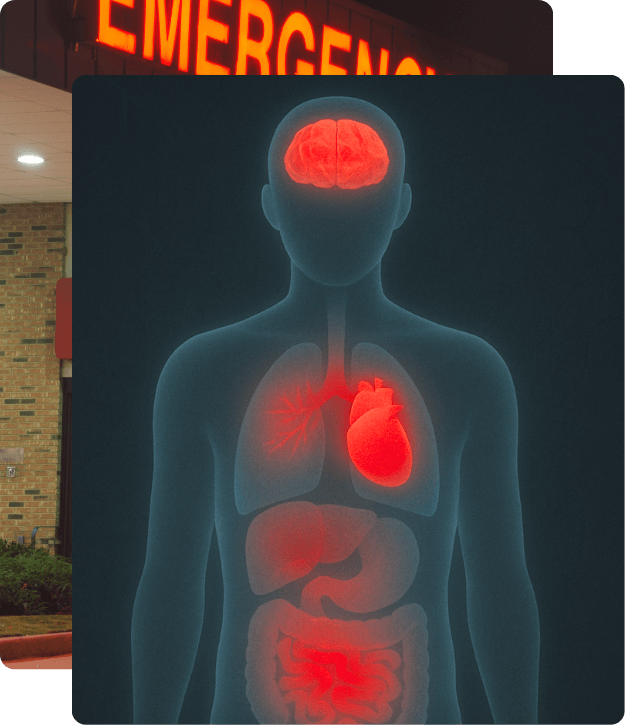
The consequences of Adverse Childhood Experiences reach far beyond emotion — and far beyond what most people are ever told. The persistent activation of the body's stress response, known as toxic stress, doesn't stay psychological. It becomes biology: disrupting hormones, degrading immune function, and altering the physical architecture of the developing brain. The body keeps the score whether anyone is paying attention or not.

Read this list correctly: These are population-level risk associations, not guarantees for any one person. Most links run through a handful of repeat pathways: stress biology, coping behaviours, and inflammation. Understanding the pathway is what makes it possible to interrupt it.

  • Pathway 1: Coping + behaviour adaptations
  • Substance use and addiction: Often arises as an attempt to self-medicate emotional pain and regulate an overactive nervous system.
  • High-risk sexual behaviours: Often serve as attempts to feel connection, safety, or intense sensation to counter emotional numbness or distress.
  • Obesity and eating disorders: Can develop as coping strategies (emotional eating) or through metabolic changes caused by chronic stress.
  • Pathway 2: Stress-system dysregulation (brain + hormones)
  • Chronic anxiety and depression: Driven by persistent HPA axis activation and dysregulated brain chemistry, increasing vulnerability to mood disorders.
  • PTSD and complex trauma: Trauma is one of the strongest known risk factors, keeping the body trapped in a past survival state.
  • Suicidal thoughts and attempts: High ACE scores can multiply risk, reflecting the despair and hopelessness that can follow unhealed trauma.
  • Memory and concentration issues: Chronic stress can impair the prefrontal cortex (PFC) and hippocampus — areas critical for planning, focus, and memory.
  • Sleep disturbances & insomnia: A hyper-activated nervous system can block the deep restorative sleep the body needs to repair and regulate.
  • Pathway 3: Inflammation + long-term wear-and-tear
  • Heart disease & hypertension: Toxic stress can damage blood vessels and keep blood pressure chronically elevated, increasing cardiovascular risk.
  • Lung disease (even in non-smokers): Chronic inflammation may reduce immune function and lung capacity over time.
  • Diabetes & metabolic disorders: Prolonged cortisol elevation and inflammation can disrupt glucose metabolism and insulin sensitivity.
  • Cancer: Systemic inflammation and dysregulated cell repair associated with chronic stress can contribute to increased cancer risk over time.
  • Autoimmune disease: Chronic stress keeps the immune system on permanent high alert — increasing the chance it eventually misfires against the body itself.
  • Chronic pain & fibromyalgia: Pain can become centralised in the nervous system after prolonged hypervigilance — not just from tissue damage, but from a system that never learned it was safe to stand down.

"Does any of this sound familiar? For me, it was like reading my own medical and psychological history — each line a piece of my life that had never once been connected to where it actually started."

// One testable implication

If early adversity primarily affects health and addiction through stress-system dysregulation, then treatments that restore regulation should reduce relapse and symptom severity — even when abstinence-only or insight-based approaches fall short. Which means the question isn't just what someone is struggling with. It's what their nervous system learned to do to survive — and whether anyone has ever helped them unlearn it.

Risk is not a verdict — it's information you can act on. The fact that most people never receive it is the problem this entire site exists to push back against.

// The Rewired Brain & Body: Understanding the Impact

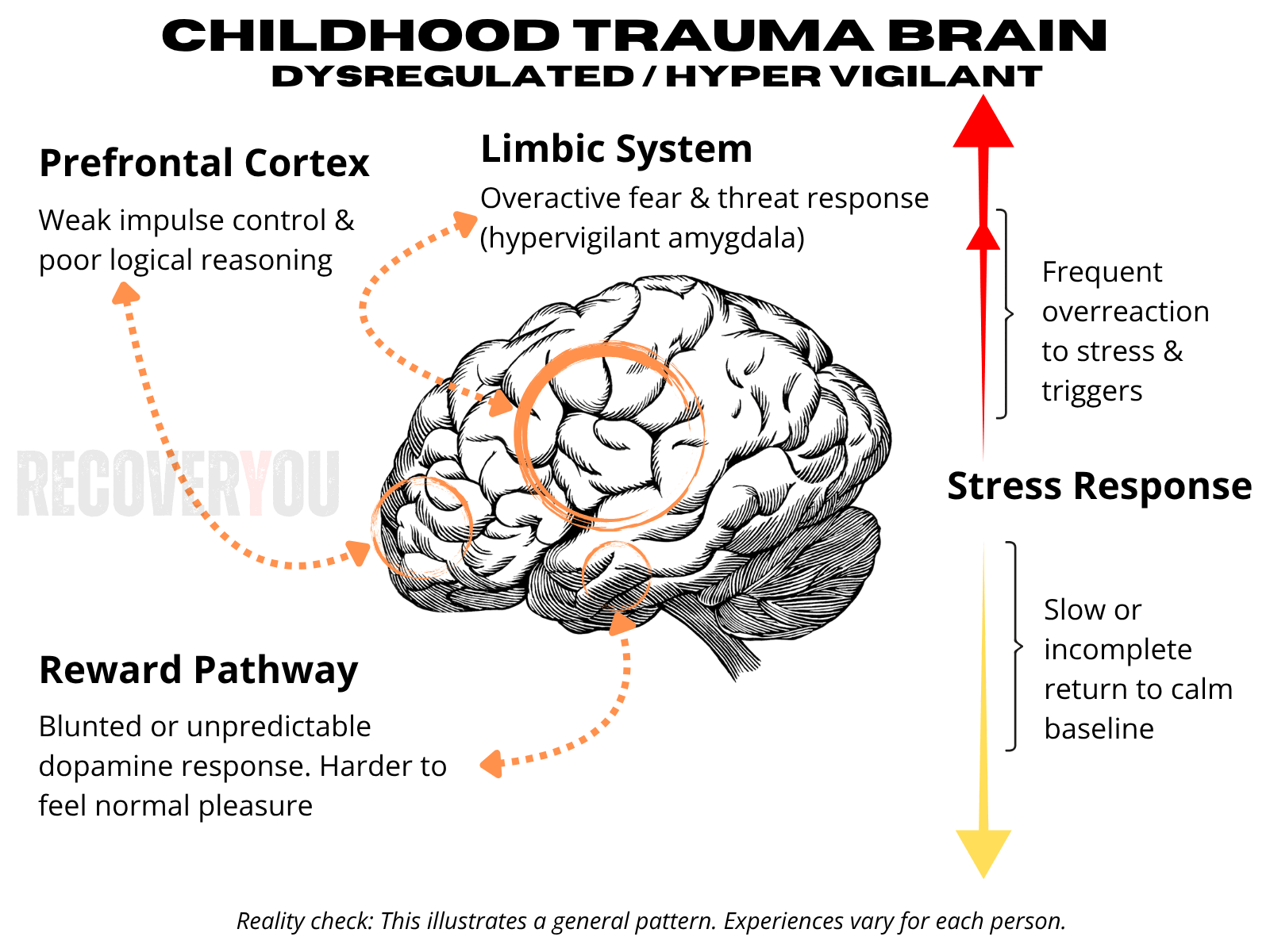
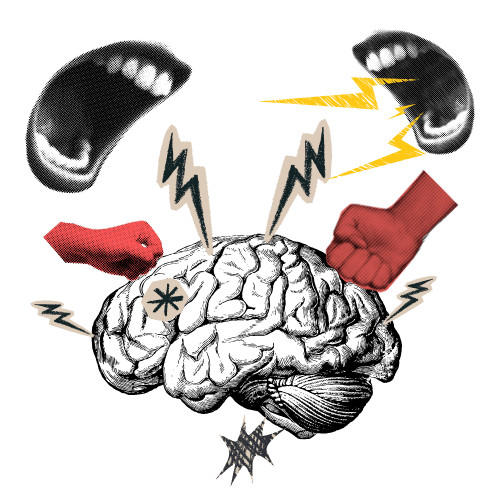
Research by Dr. Bessel van der Kolk shows how chronic stress during key developmental years — especially ages zero to five — wires the brain for survival rather than balance. Not as a metaphor. As a measurable neurological outcome. The brain that develops under chronic threat is not a broken version of a normal brain. It is a brain that did exactly what it was designed to do in the environment it was given.

  • The amygdala becomes hyperactive — scanning constantly for threat
  • The prefrontal cortex under-develops — impairing planning, regulation, and impulse control
  • The HPA axis stays on constant alert — flooding the body with cortisol long after the danger has passed

Think of it this way. A brain that developed in safety is like a family sedan — balanced steering, reliable brakes, a tuned engine built for the long road. A brain wired for survival is more like a demolition derby car. The accelerator is welded down. The alarm system never shuts off. The frame is reinforced for impact. And the brakes — the impulse control, the ability to pause before reacting — were barely built in the first place. It's a machine perfectly engineered for surviving chaos. It is exhausting and destructive to drive through ordinary life. And nobody who built it ever asked if that's what you wanted.

Illustration of how childhood trauma reshapes brain development
Illustration of long-term physical health impact of ACEs
// ACEs and Addiction:
What the Experts Say

These are not fringe voices or alternative theories. They are some of the most cited researchers and clinicians in the fields of trauma, addiction, and developmental health. What they share — across different disciplines, different countries, different decades of work — is the same conclusion: addiction is not a moral failing. It is a predictable response to unbearable conditions.

Dr. Gabor Maté — Vancouver physician and addiction specialist
  • Core question: "Not why the addiction — why the pain?" It reframes everything.
  • Addiction is not a disease to be shamed or a weakness to be overcome. It is an attempt to self-medicate pain that nobody treated.
  • "Addiction is a normal response to an abnormal situation. The trauma of early childhood is the abnormal situation. The addiction is the person's attempt to cope with the pain of that."
Dr. Bessel van der Kolk — psychiatrist, author of The Body Keeps the Score
  • Trauma is not a memory. It is a physiological imprint — stored in the body, not just the mind.
  • Addiction often arises as an attempt to turn down an overactive alarm system, or to escape the numbness of emotional shutdown.
  • "Trauma is not the story of something that happened back then. It's the current imprint of that pain, horror, and fear living inside people."
Dr. Peter Levine (Somatic Experiencing) & Dr. Stephen Porges (Polyvagal Theory)
  • Levine: Trauma is undischarged survival energy trapped in the body. Substances can be an attempt to release or numb what the nervous system never got to complete.
  • Porges: Trauma locks people into survival states — fight-or-flight or full shutdown. Addiction can be a desperate attempt to reach the calm and connection the nervous system was never allowed to find on its own.
Dr. Nadine Burke Harris — pediatrician, public health leader, author
  • Discovered the ACE Study while treating children in San Francisco — and recognised immediately that what looked like behavioural problems were biological responses to accumulated adversity.
  • Founded the Center for Youth Wellness to bring ACE screening and trauma-informed care into mainstream paediatrics — because she understood that catching this early was the point.
  • Author of The Deepest Well (2018) — one of the most accessible and important books written on ACE science for parents, educators, and anyone who works with children.
  • As California's first Surgeon General, launched ACEs Aware — a statewide initiative training providers to screen for ACEs and respond with trauma-informed interventions. Proof that this science can move from research to policy when someone refuses to let it stay academic.
  • "The single most important thing we need today is the courage to look this problem in the face and say: this is real, and this is all of us."

Burke Harris's work is the clearest evidence we have that ACEs science doesn't have to stay in journals. It can become protocols, policy, and public health movements that change real lives — if the people in power choose to act on what they already know. That last part is still very much in question.

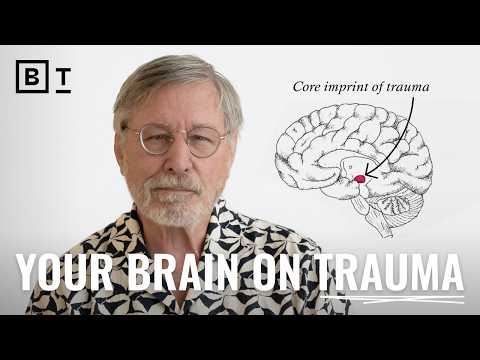
Dr. Bessel van der Kolk – The Body Keeps the Score

Watch: Bessel van der Kolk – The Body Keeps the Score Watch on YouTube

Psychiatrist Bessel van der Kolk explains how trauma isn't just remembered — it's physically lived and relived through the body and brain.

Beyond Talk Therapy
The Science Behind the Statistics

Dr. Bessel van der Kolk puts language to something many survivors already know in their bones: you cannot think your way out of a body that still feels unsafe. Traditional talk therapy often can't reach the survival centres of the brain — the regions storing implicit memory, reflexes, and fear responses that don't care what your conscious mind understands. The thinking brain can reason. The survival brain keeps reacting as if the danger never ended.

Healing, van der Kolk argues, requires more than insight. It requires experiences that rewire perception, restore felt safety, and reconnect the self to the present moment — through movement, rhythm, body-based therapies, and approaches that speak directly to the nervous system rather than the narrative. The goal isn't to forget what happened. It's to teach the body that it's finally over.

This talk connected more dots for me than years of conventional treatment did. Watch it.

It's very important to have experiences that directly contradict the helplessness and despair of the trauma.

— Dr. Bessel van der Kolk

// Trauma and Relapse:

Why Healing Matters

When trauma remains untreated, relapse isn't a surprise. At the population level, it's predictable. We just keep calling it a personal failure anyway.

  • In residential addiction treatment settings, studies consistently find roughly 1 in 3 patients meet full diagnostic criteria for PTSD — and broader trauma exposure, short of a formal diagnosis, is higher still.
  • Research shows people with PTSD are several times more likely to develop a substance use disorder than people without — in some studies, up to approximately 14 times — depending on population, severity, and complexity of trauma history.
  • In clinical addiction treatment settings, studies often find very high rates of trauma exposure — in some samples up to ~95% when broadly defined, including witnessed and indirect trauma. The person who arrives without a trauma history is the exception, not the rule.
  • For decades, the field treated these as separate problems to be handled in sequence. Project Harmony — a NIAAA-funded meta-analysis of 36 randomized trials and 4,000+ participants — found that integrated, trauma-focused treatment generally outperforms sequential approaches, particularly for PTSD outcomes.

Why Trauma Healing Is Non-Negotiable in Recovery

  • Trigger: Stress, memories, or reminders of trauma reactivate the original survival wiring — often without warning.
  • Physiological Flashback: The nervous system floods with the same panic, shame, or numbness felt during the original event. The body doesn't know it's over.
  • Compulsion: Without regulation tools, the brain defaults to its most reliable coping mechanism. The one that worked before. The one that's now the problem.
  • Outcome: Relapse is not a failure of willpower. It is what happens when the wound driving the behaviour is never treated — just managed, judged, and managed again.

Project Harmony pooled raw patient data from 36 randomized controlled trials and found that integrated, trauma-focused interventions produced some of the largest effect sizes for PTSD symptoms — with substance use outcomes improving most when behavioral therapy was paired with targeted medication. The fear that trauma work would destabilize people in early recovery was not supported by the data. This is not a controversial finding. It is an under-implemented one.

// The Shifting Dialogue:

From Blame to Context

The old model treated addiction as a brain disease or moral failure. The newer, evidence-based model recognizes it as a coping response to unendurable pain.

  • Old Model: Addiction was the problem. Treatment focused on stopping use at all costs.
  • New Model: Addiction was the attempted solution. Trauma is the problem that must be healed.

This shift is now formally recognized by major health organizations like SAMHSA, which states: "Trauma is a risk factor for nearly all behavioral health and substance use disorders." See what the peer-reviewed data actually shows.

In short, effective addiction treatment doesn’t just stop substance use — it addresses the trauma and pain that made the substance necessary in the first place.

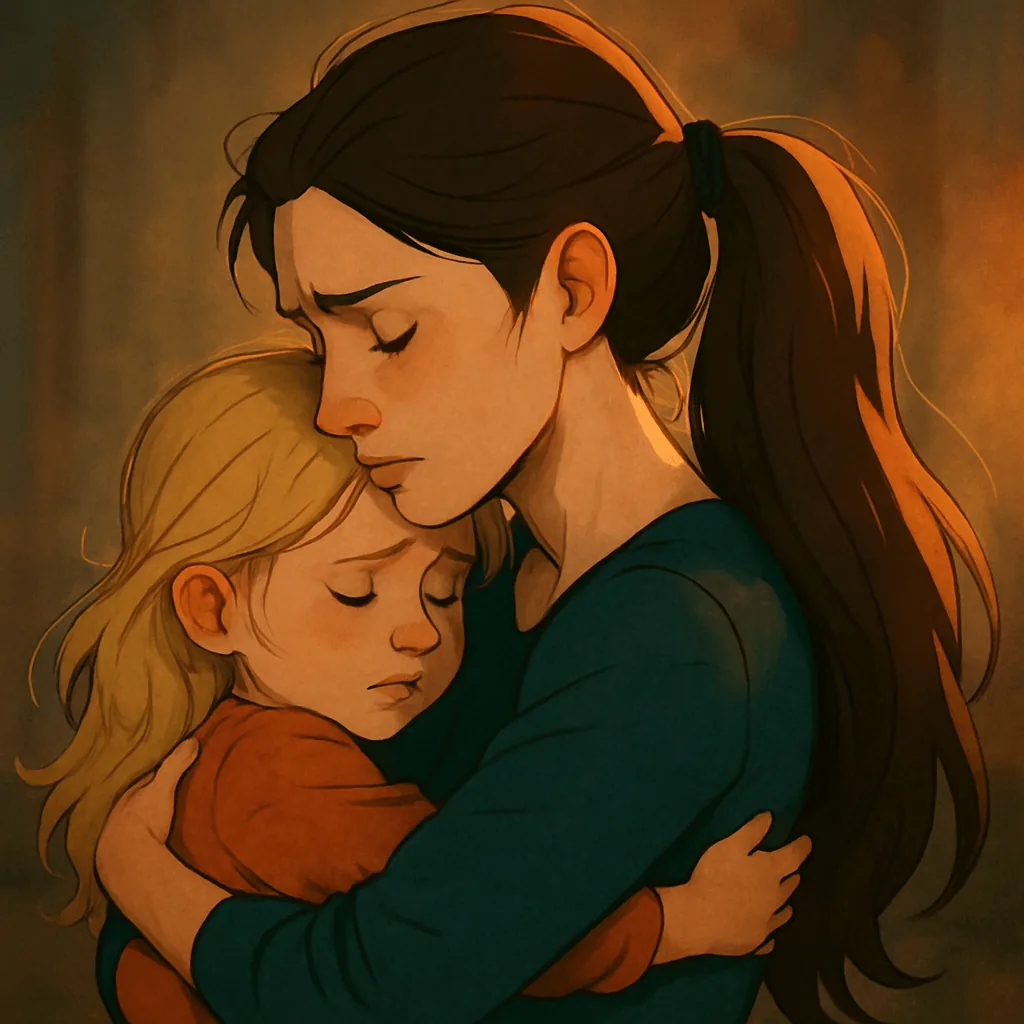
* Supportive relationships and healing illustration
// ACE Scores Aren't Destiny.

From Risk to Resilience

Your score is not your sentence. It is a risk marker — a map of what you were exposed to, not a verdict on who you are or what you're capable of. With awareness, the right tools, and people who actually understand what they're looking at, cycles can be broken. They have been. By people who started exactly where you are.

You are not defective. You are not broken. You are someone who adapted to conditions that should never have been yours to survive — and that same capacity for adaptation is exactly what makes healing possible.

The nervous system that learned to protect you can learn something new. That's not hope. That's neuroscience.

Protective Factors and Pathways to Resilience

Even with a high ACE score, recovery is possible — and the research on what makes it more likely is remarkably consistent. These aren't feel-good suggestions. They are the documented factors that change outcomes.

  • Safe, stable, and nurturing relationships: Healing begins in connection. Safety and co-regulation help repair attachment wounds and rebuild the capacity to trust — others, and eventually yourself.
  • Access to trauma-informed therapy: Evidence-based approaches help process what talk therapy alone can't reach — restoring regulation to a nervous system that never had the chance to settle.
  • Supportive peer communities: Connection dissolves shame faster than almost anything else. Being genuinely known by people who don't flinch is part of the medicine.
  • Self-regulation practices: Mindfulness, breathwork, and grounding exercises teach the nervous system that the present moment is safe — something it may never have been told before.
  • Opportunities for mastery: Skill-building, creativity, and movement restore agency and self-worth. They show you that your life can be shaped — not just endured.

Where to Next?

Follow the next step in order, or branch out into related topics.

Sources + Further Reading
  1. Felitti, V. J., Anda, R. F., et al. (1998). Relationship of childhood abuse and household dysfunction to many of the leading causes of death in adults. American Journal of Preventive Medicine, 14(4), 245–258. The original foundational CDC–Kaiser ACE Study with over 17,000 adults. Established the dose-response relationship between ACE score and adult health outcomes, including the 7x alcohol use disorder risk, 10x injected drug use risk, and 12x suicide attempt risk at ACE score 4+, and the 1.5x depression odds at ACE score 1. View PubMed Record
  2. Brown, D. W., et al. (2009). Adverse childhood experiences and the risk of premature mortality. American Journal of Preventive Medicine, 37(5), 389–396. Longitudinal follow-up of 17,337 ACE Study participants showing those with 6+ ACEs had a median life expectancy approximately 20 years shorter than those with none, due to risky coping behaviours, allostatic load, and chronic disease onset. Source for the lifespan reduction figure cited on this page. View PubMed Record
  3. Felitti, V. J. (2002). The relation between adverse childhood experiences and adult health: Turning gold into lead. The Permanente Journal, 6(1), 44–47. Accessible summary of ACE Study findings written by the study's co-founder. Documents the dose-response relationship between ACE score and injected drug use — including the 4,600% increase in IV drug use risk at ACE score 6 in males — and the graded increase in suicide attempt incidence at higher ACE scores. Adapted from an earlier publication in the Family Violence Prevention Fund's Health Alert. View Full Text via PMC
  4. Felitti, V. J. (2018). The relation between adverse childhood experiences and adult health: Turning gold into lead. The Permanente Journal (PMC reprint of 2002 article). Source for the specific subgroup finding that a male child with an ACE score of 6 has a 4,600% increase in the likelihood of later using intravenous drugs — the most striking published figure in the ACE dataset on substance use risk. View PMC Record
  5. Dube, S. R., Felitti, V. J., Dong, M., Chapman, D. P., Giles, W. H., & Anda, R. F. (2003). Childhood abuse, neglect, and household dysfunction and the risk of illicit drug use: The Adverse Childhood Experiences Study. Pediatrics, 111(3), 564–572. Establishes the graded dose-response relationship between ACE score and illicit drug use initiation and addiction across age cohorts. Source for the 2–4x increase in drug initiation risk per ACE in the lower score range (1–3), represented as a gradient in the risk chart on this page. View PubMed Record
  6. Hughes, K., Bellis, M. A., Hardcastle, K. A., et al. (2017). The effect of multiple adverse childhood experiences on health: A systematic review and meta-analysis. The Lancet Public Health, 2(8), e356–e366. Large-scale meta-analysis confirming the dose-response relationship across outcomes. Source for the depression odds ratio of approximately 4.4x at ACE score 4+ (95% CI 3.5–5.5) and anxiety 3.7x, cited in the risk chart on this page. View PubMed Record
  7. Bryan, R. H. (2018). Getting to why: Adverse childhood experiences' impact on adult health. The Journal for Nurse Practitioners, 15(2), 153–157. Cites the published finding that a patient with an ACE score of 6 or more is 24 times more likely to attempt suicide than a patient with an ACE score of 0 — source for the suicide attempt figure at ACE 6+ shown in the risk chart on this page. View ScienceDirect Record
  8. Mills, K. L., Teesson, M., Ross, J., & Peters, L. (2006). Trauma, PTSD, and substance use disorders: Findings from the Australian National Survey of Mental Health and Well-Being. American Journal of Psychiatry, 163(4), 652–658. General population epidemiological survey of 10,641 Australians finding that over one-third (34.4%) of individuals meeting criteria for PTSD also met criteria for at least one substance use disorder — most commonly alcohol use disorder. Widely cited alongside U.S. National Epidemiologic Survey data to establish the scale of PTSD/SUD comorbidity across populations, and as context for the higher rates consistently observed in clinical addiction treatment settings. View PubMed Record
  9. Chilcoat, H. D., & Menard, C. (2003). Epidemiological investigations: Comorbidity of posttraumatic stress disorder and substance use disorder. In P. Ouimette & P. J. Brown (Eds.), Trauma and Substance Abuse: Causes, Consequences, and Treatment of Comorbid Disorders (pp. 9–28). American Psychological Association. Also: Ford, J. D., Russo, E. M., & Mallon, S. D. (2007). Integrating treatment of posttraumatic stress disorder and substance use disorder. Journal of Counseling & Development, 85(4), 475–489. These two sources are directly cited in peer-reviewed literature for the finding that patients with PTSD are significantly more likely — in some studies up to approximately 14 times — to develop a co-occurring substance use disorder, depending on population, severity, and methodology. View on ResearchGate
  10. Ford, J. D., Hawke, J., Alessi, S., Ledgerwood, D., & Petry, N. (2007). Psychological trauma and PTSD symptoms as predictors of substance dependence treatment outcomes. Behaviour Research and Therapy, 45(10), 2417–2431. Also: Farley, M., Golding, J. M., Young, G., Mulligan, M., & Minkoff, J. R. (2004). Trauma history and relapse probability among patients seeking substance abuse treatment. Journal of Substance Abuse Treatment, 27(2), 161–167. Multiple clinical studies examining treatment-seeking populations have found trauma exposure rates of up to 95% when broadly defined — including witnessed and indirect trauma — establishing trauma history as near-universal in substance use disorder treatment settings. View Ford et al. on PubMed
  11. Najavits, L. M., Weiss, R. D., & Shaw, S. R. (1997). The link between substance abuse and posttraumatic stress disorder in women. The American Journal on Addictions, 6(4), 273–283. Also: Kendler, K. S., et al. (2000). Childhood sexual abuse and adult psychiatric and substance use disorders in women. Archives of General Psychiatry, 57(10), 953–959. Multiple studies examining treatment-seeking populations consistently found that 50–66% of individuals in addiction treatment reported a history of childhood abuse — establishing trauma history as the norm rather than the exception in SUD populations. View Kendler et al. on PubMed
  12. Hoge, C. W., et al. (2004). Combat duty in Iraq and Afghanistan, mental health problems, and barriers to care. New England Journal of Medicine, 351(1), 13–22. Also: McDevitt-Murphy, M. E., et al. (2010). PTSD and substance use disorders among Gulf War I veterans. Addictive Behaviors, 35(5), 516–519. Hoge et al. surveyed 6,201 soldiers post-deployment, documenting high co-occurrence of PTSD and substance use. McDevitt-Murphy et al. found that over 75% of veterans seeking SUD treatment screened positive for PTSD, with both conditions mutually reinforcing each other. View Hoge et al. on PubMed
  13. Hien, D. A., Morgan-López, A. A., Saavedra, L. M., Ruglass, L. M., Ye, A., López-Castro, T., Fitzpatrick, S., Killeen, T. K., Norman, S. B., Ebrahimi, C. T., & Back, S. E. (2023). Project Harmony: A meta-analysis with individual patient data on behavioral and pharmacologic trials for comorbid posttraumatic stress and alcohol or other drug use disorders. American Journal of Psychiatry, 180(2), 155–166. Primary output of Project Harmony 1.0. Pooled raw data from 36 randomized clinical trials (4,000+ participants) using individual patient data meta-analysis, integrative data analysis, and propensity score weighting. Found that integrated, trauma-focused interventions generally outperform sequential approaches — particularly for PTSD outcomes — and that the widely held clinical assumption that trauma processing would destabilize people in early addiction recovery was not supported by the data. View PubMed Record
  14. Centers for Disease Control and Prevention. (n.d.). About adverse childhood experiences (ACEs). The primary public health resource for ACE definitions, prevalence data, and key health outcomes — including the population-level attribution figures for IV drug use and suicide attempts cited on this page. Access CDC ACE Overview
  15. SAMHSA. (2014). SAMHSA's concept of trauma and guidance for a trauma-informed approach. HHS Publication No. (SMA) 14-4884. Foundational federal policy document defining trauma and establishing the Six Key Principles of a Trauma-Informed Approach across healthcare, behavioral health, and social service systems. Explicitly states that trauma is a risk factor for nearly all behavioral health and substance use disorders. Download SAMHSA Publication (PDF)
  16. PolicyWise for Children & Families. (2014). Alberta Adverse Childhood Experiences (ACE) Survey: Final Report. Population-based survey of Albertans confirming local prevalence rates consistent with the original CDC–Kaiser findings, including a clear dose-response relationship between ACE score and adult health outcomes in the Alberta population. View Alberta PDF
  17. Centers for Disease Control and Prevention. (n.d.). Preventing adverse childhood experiences (ACEs). Official CDC framework for evidence-based strategies to prevent ACEs and strengthen protective factors in families and communities. Underpins the protective factors section of this page. View Prevention Hub
  18. McEwen, B. S. (2007). Physiology and neurobiology of stress and adaptation: Central role of the brain. Physiological Reviews, 87(3), 873–904. Comprehensive review of how chronic stress dysregulates the HPA axis and reshapes brain architecture — including the amygdala, prefrontal cortex, and hippocampus — through sustained glucocorticoid exposure and allostatic load. Underpins the rewired brain section of this page. View PubMed Record
  19. Burke Harris, N. (2015). How childhood trauma affects health across a lifetime. TED Talk. Introduced ACE science and toxic stress to a global audience, synthesising the population data and biological mechanisms of ACEs for a non-specialist audience. One of the most widely viewed explanations of the ACE Study's public health implications. Watch on YouTube
  20. Burke Harris, N. (2018). The Deepest Well: Healing the Long-Term Effects of Childhood Adversity. Houghton Mifflin Harcourt. Book-length exploration of the biological mechanisms of ACEs, written from the perspective of a clinician who recognised the ACE Study's implications while treating children in an underserved San Francisco community. Accessible and authoritative — recommended for anyone wanting to go deeper on the science. View on Goodreads
  21. Van der Kolk, B. A. (2014). The Body Keeps the Score: Brain, Mind, and Body in the Healing of Trauma. Viking. Seminal text on how trauma is stored and relived in the brain and body, including the mechanisms by which chronic early adversity produces a hyperactive amygdala, underdeveloped prefrontal cortex, and a chronically dysregulated HPA axis — and why body-based therapies are often necessary where talk therapy alone falls short. View on Goodreads
  22. Maté, G. (2008). In the Realm of Hungry Ghosts: Close Encounters with Addiction. Knopf Canada. Ground-level account of addiction written from decades of clinical work with severely addicted populations in Vancouver's Downtown Eastside. Makes the case — grounded in neuroscience and lived experience — that addiction is a response to unprocessed pain rooted in early adversity, not a moral failing or disease in isolation. View on Goodreads

These references provide the empirical, clinical, and public health foundation for this page. They are for educational context and are not medical advice.

Feeling overwhelmed by what you’ve read? Support is here • Call 988 Anywhere in Canada 24/7 Suicide Crisis Line • In Alberta call 211 (community & mental health referrals) • Distress Line 780-482-HELP • 911 in emergencies